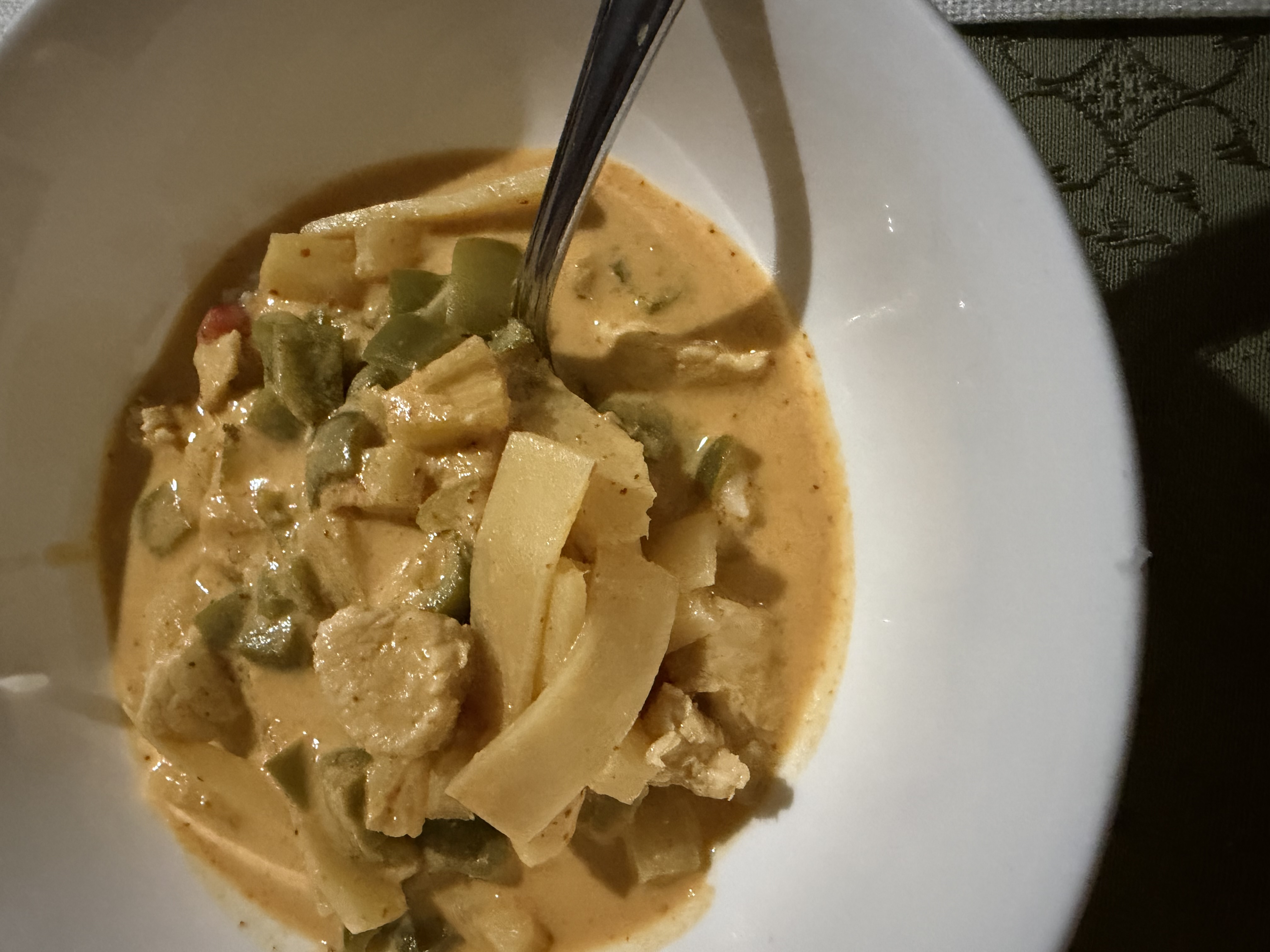
Restaurant-quality Thai curry at home—authentic flavors without the takeout waste.
The Story
I grew up in rural Wisconsin, where “exotic” food meant pizza. Then I moved to Seattle after college, and my world opened up. Thai restaurants were everywhere, and I fell in love with curry—the way the coconut milk cut through the heat, the brightness of lime leaves, the complex layers of flavor I’d never experienced growing up. When I eventually moved back to Wisconsin, I couldn’t find Thai food like I’d had in Seattle. So I learned to make it myself.
I discovered that making Thai curry at home was easier than I’d ever imagined. The secret? Starting with quality curry paste and building layers of flavor the traditional way—toasting the paste, adding coconut cream first, then building from there.
What I love about this curry is how it teaches you the fundamentals of Thai cooking without requiring specialty skills or hard-to-find ingredients. Sure, you need a few key items—Maesri curry paste, lime leaves, fish sauce—but once you stock those in your pantry, this dish comes together in 35 minutes. That’s faster than most delivery options, and the result tastes like something you’d order at a high-end Thai restaurant.
It’s also incredibly forgiving. You can swap proteins (chicken, shrimp, tofu), adjust the vegetables based on what’s in season or what needs to be used up, and dial the heat level up or down depending on whether you choose red or green curry paste. The combination of savory (fish sauce), sweet (pineapple and sugar), aromatic (lime leaves and basil), and rich (coconut milk) creates a balanced dish that works whether you’re cooking for yourself or feeding a crowd.
And here’s the sustainability win: making this at home means zero single-use containers, no delivery emissions, and complete control over your ingredients. You can choose organic chicken, local peppers, and coconut milk from brands with better sourcing practices—choices that aren’t available when you’re ordering takeout.
Key Details
Prep Time: 15 minutes | Cook Time: 20 minutes | Yield: 4-6 servings
Sustainability Note: Homemade Thai curry beats takeout in every way—no plastic containers, no styrofoam, no delivery fuel. Plus, you control the quality and sourcing of every ingredient. I dice and freeze bell peppers when they’re in season to use in this and other cooked dishes year-round—capturing peak flavor at the lowest price.
The Recipe
Ingredients
| Amount | Ingredient |
|---|---|
| 4 | Boneless chicken breast halves, cut into bite-sized pieces |
| 1 (4 oz) can | Maesri curry paste (red or green) |
| 8 | Lime leaves |
| To taste | Fresh basil |
| 1 (19 oz) can | Bamboo shoots |
| 2 | Bell peppers (red and/or green), sliced |
| 2 (13.5 oz) cans | Coconut milk |
| 1 (16 oz) can | Pineapple chunks |
| 1 tbsp | Olive oil |
| 1/4 cup | Fish sauce |
| 2 tbsp | Sugar |
Instructions
-
Toast curry paste:
- Heat olive oil on low in a large pot or wok
- Add curry paste
- Heat at medium heat until you can smell the curry (becomes fragrant)
-
Add coconut cream:
- Add the thick part of the coconut milk (the cream that rises to the top)
- Stir until well blended, about 2 minutes
-
Cook chicken:
- Add chicken and turn up heat to high
- Cook for 1 minute, stirring to coat with curry
-
Add liquids and aromatics:
- Add rest of coconut milk
- Add bamboo shoots and lime leaves
- Cook until chicken is done (about 10-15 minutes)
-
Add vegetables and finish:
- Add bell peppers, pineapple, fish sauce, and sugar
- Cook for 1 minute
- Add fresh basil
- Stir to combine
-
Serve:
- Serve hot over rice or rice noodles
Why This Recipe
This beats takeout in every way—quality, cost, and waste. Thai curry might seem intimidating, but this recipe proves that authentic flavors are within reach for any home cook. When you make this instead of ordering out, you’re saving $15-20 per serving, eliminating all the packaging waste, and creating leftovers that reheat beautifully for tomorrow’s lunch.
It’s a technique worth learning. Toasting the curry paste, blooming it in coconut cream, building flavors in stages—these are foundational Thai cooking methods that translate to dozens of other dishes. Master this curry, and you’ll have the confidence to tackle more Thai recipes and adapt them to your taste.
Notes & Variations
- Curry paste: Maesri curry paste comes in different heat levels—choose red for spicier or green for milder
- Coconut cream: The thick coconut cream is the part that separates and rises to the top of the can
- Lime leaves: Don’t skip the lime leaves—they add authentic Thai flavor. Use dried lime leaves (available at Asian markets or online), or if you find fresh ones, freeze or dehydrate them for longer storage
- Basil: Fresh basil should be added at the end to preserve its flavor and color; use Thai basil if available for more authentic flavor
Variations:
- Protein: Use shrimp instead of chicken, or try tofu for a vegetarian version
- Vegetables: Add snap peas, carrots, baby corn, or whatever vegetables need to be used up
- Seasoning: Adjust sugar and fish sauce to taste—start with the recipe amounts and tweak from there
Additional notes from our kitchen:
- Bell peppers: I dice and freeze bell peppers from our garden or when I find a good price on them. For cooked dishes like this curry, frozen peppers work perfectly—just add them straight from the freezer without thawing. This saves money, reduces waste, and means I always have peppers on hand.
- Fish sauce: This is essential for authentic Thai flavor, but if you’re avoiding it for dietary reasons, you can substitute soy sauce (though the flavor will be different)
- Pineapple: We use canned pineapple for convenience, but fresh pineapple chunks work beautifully if you have them
- Heat level: The curry paste does most of the heavy lifting for spice—red paste is hotter, green is milder but still flavorful
- Leftovers: This curry tastes even better the next day after the flavors have had time to meld
Serving Suggestions
- Serve over jasmine rice or rice noodles
- Garnish with extra fresh basil leaves
- Add lime wedges on the side for extra brightness
- Serve with cucumber slices or a simple side salad to balance the richness
Storage & Make-Ahead
- Refrigerate: Store leftovers in an airtight container for up to 3 days
- Freeze: Can be frozen for up to 2 months in freezer-safe containers
- Reheat: Reheat gently on stovetop, adding a splash of coconut milk if the sauce has thickened too much
- Make-Ahead: You can prep all the vegetables and chicken ahead of time, but the curry is best cooked fresh (it only takes 20 minutes of active cooking)
Links & References
- Full Recipe Details: See COOKBOOK_REFERENCE.md for all family recipes
- Source: Family Recipe Collection
- Related: More Friday Food recipes and international cuisine coming soon
Print This Recipe
Click here to print this recipe or use your browser’s print function (Cmd+P on Mac, Ctrl+P on Windows).
Mom’s Thai Curry Prep: 15 min | Cook: 20 min | Yield: 4-6 servings
Ingredients:
- 4 boneless chicken breasts, cut into bite-sized pieces
- 1 (4 oz) can Maesri curry paste (red or green)
- 8 lime leaves
- Fresh basil to taste
- 1 (19 oz) can bamboo shoots
- 2 bell peppers, sliced
- 2 (13.5 oz) cans coconut milk
- 1 (16 oz) can pineapple chunks
- 1 tbsp olive oil
- 1/4 cup fish sauce
- 2 tbsp sugar
Instructions:
- Toast curry paste in olive oil until fragrant
- Add thick coconut cream, stir 2 minutes
- Add chicken, cook 1 minute on high
- Add remaining coconut milk, bamboo shoots, lime leaves; cook 10-15 minutes
- Add peppers, pineapple, fish sauce, sugar; cook 1 minute
- Add basil, stir, and serve over rice
Storage: Refrigerate 3 days or freeze up to 2 months.
Thai curry proves that restaurant-quality cooking isn’t about fancy equipment or culinary school—it’s about quality ingredients, simple techniques, and the confidence to try something new in your own kitchen.