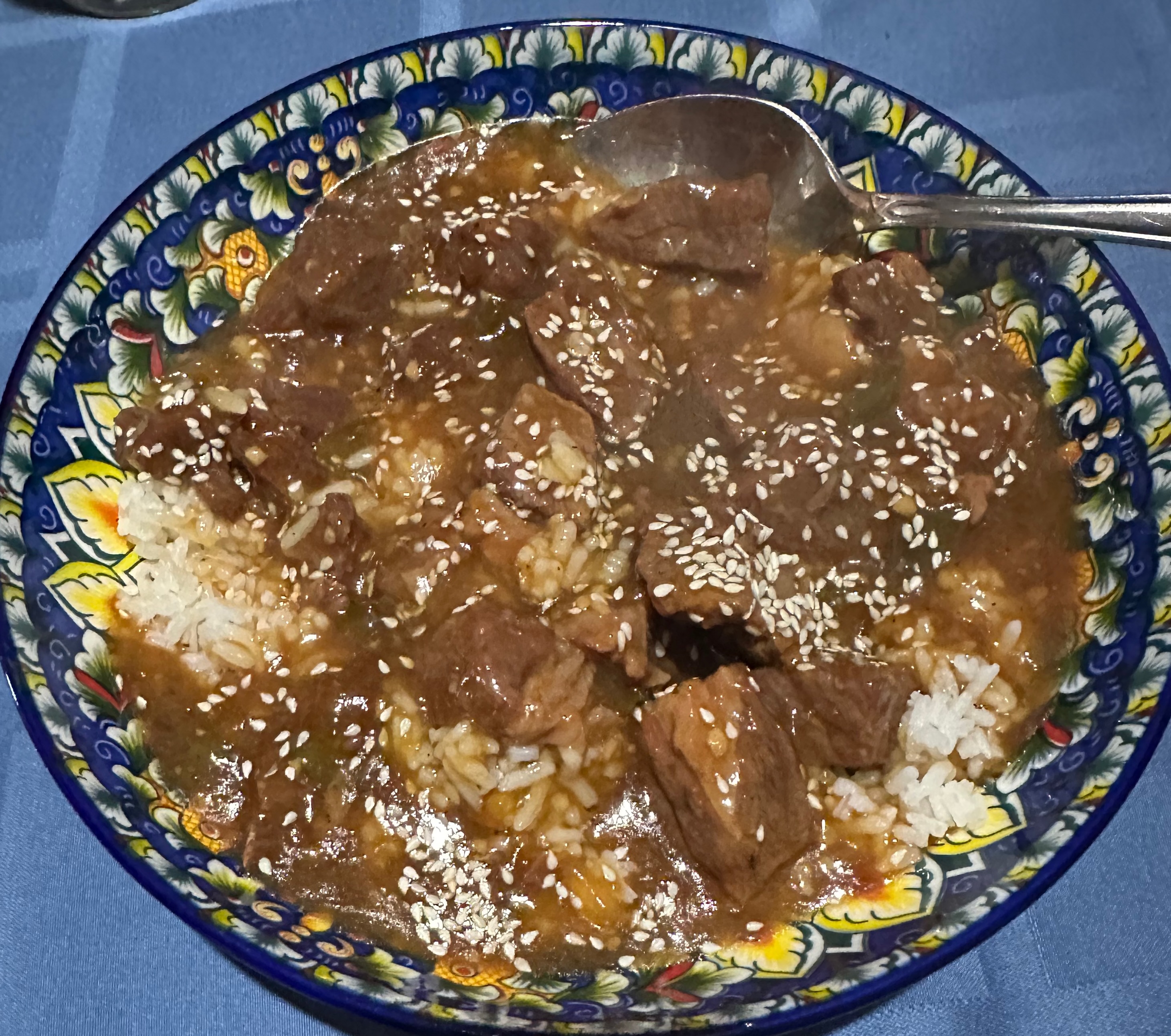
The recipe that justified buying an Instant Pot—10 minutes prep, 15 minutes cooking, melt-in-your-mouth results.
The Story
This is the recipe that finally convinced us to get an Instant Pot. I’d been skeptical—another kitchen gadget, another thing taking up counter space. Then Brian—Scott’s best friend since college—came to visit and brought his Instant Pot along with everything to make Korean beef for us.
He set it up, walked us through the process, and we watched: ten minutes of prep, fifteen minutes of pressure cooking, and meat so tender it practically melted. The flavor rivaled any restaurant. I was sold on the spot.
Now it’s become a family favorite. Scott and Brian request it when they get together. Our adult children ask for it when they visit. And we’ve learned to double the recipe—because if you’re going to make it, you might as well ensure leftovers. Six servings disappear fast; twelve servings means we actually have meals for the week.
Here’s the win: this beats takeout in every way. Korean beef bowls at restaurants run $12-15 per serving. Doubling this recipe makes 12 servings for about $40 in ingredients—that’s $3.33 per serving versus $12-15. No delivery fees, no packaging waste, no waiting. Just good food that comes together faster than most delivery orders.
Key Details
Prep Time: 10 minutes | Cook Time: 15 minutes pressure + 5 minutes sauté (plus time to come to pressure) | Yield: 6 servings
Sustainability Note: One Instant Pot meal replaces multiple restaurant orders—no single-use containers, no delivery emissions, no excess packaging. Plus, the Instant Pot uses less energy than your oven or stovetop for long-cooking dishes.
The Recipe
Ingredients
For the Sauce:
| Amount | Ingredient |
|---|---|
| 1/2 cup | Beef broth |
| 1/3 cup | Reduced sodium soy sauce |
| 1/3 cup | Brown sugar, packed |
| 4 | Garlic cloves, minced |
| 1 tbsp | Sesame oil |
| 1 tbsp | Rice wine vinegar |
| 1 tbsp | Fresh ginger, grated |
| 1 tsp | Sriracha (or more, to taste) |
| 1/2 tsp | Onion powder |
| 1/2 tsp | White pepper |
For the Beef:
| Amount | Ingredient |
|---|---|
| 3 lbs | Boneless beef chuck roast, cut into 1-inch cubes |
| 3 tbsp | Cornstarch |
| 3 tbsp | Water |
Garnish:
| Amount | Ingredient |
|---|---|
| 1 tsp | Sesame seeds |
| 2-3 | Green onions, thinly sliced |
Instructions
-
Make sauce:
- In a large bowl, whisk together beef broth, soy sauce, brown sugar, minced garlic, sesame oil, rice wine vinegar, grated ginger, Sriracha, onion powder, and white pepper
-
Prepare beef in Instant Pot:
- Place cubed chuck roast into a 6-qt Instant Pot
- Pour sauce mixture over beef
- Stir until well combined
-
Pressure cook:
- Close lid and seal valve
- Select Manual setting, adjust pressure to HIGH
- Set time for 15 minutes
- When finished cooking, quick-release pressure according to manufacturer’s directions
-
Make cornstarch slurry:
- In a small bowl, whisk together 3 tbsp cornstarch and 3 tbsp water
-
Thicken sauce:
- Open Instant Pot
- Select High Sauté setting
- Stir in cornstarch mixture
- Cook, stirring frequently, until sauce has thickened, about 2-3 minutes
-
Serve:
- Serve immediately over rice or noodles
- Garnish with sesame seeds and sliced green onions
Why This Recipe
This beats restaurant Korean beef every time. Korean beef bowls at restaurants cost $12-15 per serving. We double this recipe and make 12 servings for about $40 in ingredients—that’s $3.33 per serving. No delivery fees, no 30-minute wait, no soggy containers. Just restaurant-quality flavor that’s ready in 25 minutes.
The Instant Pot is worth it. I was skeptical about adding another kitchen gadget. Then Brian showed up with his Instant Pot and made this dish for us. The Instant Pot makes tough cuts of meat incredibly tender in minutes—no babysitting, no stirring, no watching. Set it and walk away. For recipes like this, it’s not just convenient; it’s transformative.
Double the recipe, own the week. We learned to double this recipe because six servings disappear too fast. Twelve servings means leftovers for days. Make it Sunday, eat it through Thursday. The meat reheats beautifully, and the flavors actually deepen overnight. That’s four easy weeknight dinners from one batch of cooking.
Notes & Variations
- Chuck roast: This cut becomes incredibly tender in the pressure cooker—don’t substitute with a leaner cut or you’ll lose the melt-in-your-mouth texture
- Cube size: 1-inch cubes work best for even cooking
- Spice level: Adjust Sriracha to taste—start with 1 tsp, add more after cooking if you want more heat
- Fresh ginger: Don’t substitute with ground ginger—fresh is essential for authentic flavor
- Quick-release: This recipe uses quick-release, not natural release
- Gluten-free: Use tamari or gluten-free soy sauce (naturally GF when made with GF soy sauce)
Variations:
- Vegetables: Add broccoli, snap peas, or bok choy in the last 5 minutes
- Spicier: Double the Sriracha or add gochugaru (Korean red pepper flakes)
- Sweeter: Add an extra tablespoon of brown sugar
- Low-carb: Serve over cauliflower rice instead of regular rice
Additional notes from our kitchen:
- We always double it: Six servings disappear too fast in our house. We double the recipe to get 12 servings—ensures leftovers for the week. Just double all ingredients and use an 8-qt Instant Pot (or make two batches in a 6-qt).
- Chuck roast choice: Buy a whole chuck roast and cube it yourself—it’s cheaper than pre-cut stew meat and you control the size
- Sauce prep: You can whisk the sauce together the night before and refrigerate—saves time on cooking day
- Cornstarch timing: Don’t skip the cornstarch slurry—it transforms the thin sauce into a glossy, restaurant-quality coating
- Instant Pot size: Single recipe works in a 6-qt or 8-qt Instant Pot. Doubled recipe needs an 8-qt. Don’t use a 3-qt—it won’t fit.
- Pressure release: Quick-release means you turn the valve to release steam immediately. Be careful—hot steam comes out fast.
Serving Suggestions
- Serve over steamed white or brown rice
- Try over cauliflower rice for low-carb option
- Add steamed broccoli, snap peas, or bok choy
- Serve with kimchi on the side for authentic Korean meal
- Great over noodles (rice noodles, ramen, or udon)
- Top with extra green onions and sesame seeds
Storage & Make-Ahead
- Refrigerate: Store in airtight container for up to 4 days
- Reheat: Microwave individual portions or reheat on stovetop with a splash of water
- Freeze: Freezes well for up to 3 months. Thaw overnight in refrigerator before reheating
- Meal Prep: Portion into containers with rice for grab-and-go lunches
- Sauce Prep: Make sauce ahead and refrigerate for up to 2 days
Links & References
- Full Recipe Details: See COOKBOOK_REFERENCE.md for all family recipes
- Source: Family Recipe Collection
- Related: More Friday Food recipes and Instant Pot favorites coming soon
Print This Recipe
Click here to print this recipe or use your browser’s print function (Cmd+P on Mac, Ctrl+P on Windows).
Instant Pot Korean Beef Prep: 10 min | Cook: 15 min | Yield: 6 servings
Sauce:
- 1/2 cup beef broth
- 1/3 cup soy sauce (reduced sodium)
- 1/3 cup brown sugar, packed
- 4 garlic cloves, minced
- 1 tbsp sesame oil
- 1 tbsp rice wine vinegar
- 1 tbsp fresh ginger, grated
- 1 tsp Sriracha
- 1/2 tsp onion powder
- 1/2 tsp white pepper
Beef:
- 3 lbs boneless beef chuck roast, cut into 1-inch cubes
- 3 tbsp cornstarch
- 3 tbsp water
Garnish:
- 1 tsp sesame seeds
- 2-3 green onions, sliced
Instructions:
- Whisk together all sauce ingredients
- Place beef cubes in Instant Pot, pour sauce over, stir
- Seal lid, set Manual/High pressure for 15 minutes
- Quick-release pressure when done
- Mix cornstarch and water, stir into beef
- Sauté on high 2-3 minutes until thickened
- Garnish with sesame seeds and green onions
Serve over: Rice, cauliflower rice, or noodles
Storage: Refrigerate 4 days or freeze 3 months.
This is the recipe that convinced us an Instant Pot was worth the counter space. Scott and Brian’s favorite proves that the best meals don’t have to be complicated—they just have to be consistently delicious.