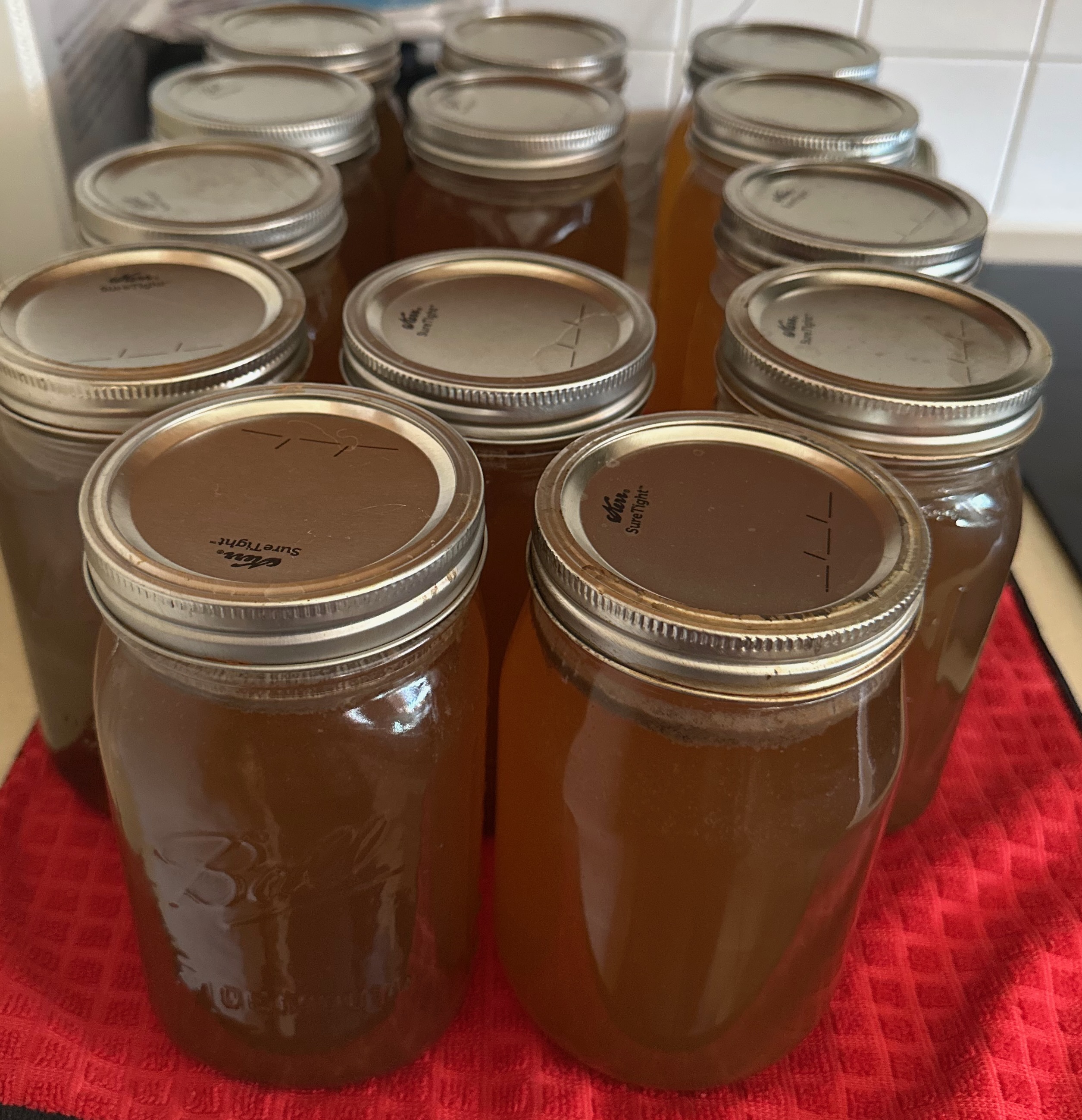
Rich, flavorful broth from bones you were going to throw away—better than store-bought, and it costs nothing but time.
The Story
Every time we eat steak, roast a chicken, or carve a turkey, bones go in the trash. Most people don’t think twice about it. But those bones—the ones you paid for as part of the meat—contain hours of rich, deeply flavored broth just waiting to be extracted.
I started saving bones years ago, and I have not bought broth since. The system is simple: gallon freezer bags live in my freezer—separate bags for chicken, turkey, and beef. Beef bones go in one bag. Chicken carcasses go in another. Turkey bones after Thanksgiving go in their own bag. When a bag is full, I make broth.
The result is nothing like the thin, salty liquid in a carton at the grocery store. Homemade bone broth has body. It gels when refrigerated because of the collagen extracted from the bones. It has depth and complexity that comes from hours of slow cooking. And it costs exactly nothing beyond what I already spent on the meat.
Here’s my secret for incredible flavor: if we smoke the meat first, those bones make the best broth. Smoked chicken carcasses, smoked turkey bones, bones from smoked brisket—the smokiness infuses into the broth and adds a depth you cannot get any other way. Not every batch is smoked, but the smoked batches are special.
I add my vegetable scraps to the bone broth too. The same freezer bag system—onion ends, carrot peels, celery leaves—goes right into the pot with the bones. The vegetables add complexity, and it means I am using two “waste” streams to make one incredible product.
Key Details
Prep Time: 15 minutes | Cook Time: 8-24 hours | Yield: Varies (depends on bones)
Sustainability Note: Every batch of bone broth represents bones that would have gone to the landfill, packaging you did not buy, and money you did not spend. The bones are already paid for. The broth is free.
The Recipe
Ingredients
| Amount | Ingredient |
|---|---|
| To fill pot | Saved bones (chicken, turkey, or beef) |
| To cover | Water (enough to cover bones by 1-2 inches) |
| 1/4 cup | Apple cider vinegar or white vinegar |
| 1 bag (optional) | Vegetable scraps from the freezer |
| To taste | Salt |
| 1-2 sprigs (optional, for poultry) | Fresh rosemary (I use homegrown) |
Note: This is a “use what you have” recipe. The bones are the star. Everything else is flexible.
Instructions
-
Dump frozen bones into slow cooker or Nesco roaster. No need to thaw. If you have vegetable scraps saved, add those too.
-
Cover with water. Add enough water to cover everything by 1-2 inches.
-
Add vinegar. The vinegar helps extract minerals and nutrients from the bones. You will not taste it in the finished broth.
-
Season. Salt to taste—or leave unsalted and season when you use the broth. Add rosemary for poultry if desired.
-
Cook low and slow. Set slow cooker to LOW and let it go for 8-24 hours. The longer it cooks, the richer the broth. I often start it before work and let it run all day, then overnight.
-
Strain through a jelly bag strainer. Pour the broth through a jelly bag strainer (or cheesecloth) into a large bowl or pot. Press on the solids to extract all the liquid. Discard the solids.
-
Cool and skim fat (optional). Let broth cool to room temperature. If you want to remove the fat, refrigerate overnight—the fat will solidify on top and can be easily lifted off. Or leave the fat for richer broth.
-
Store or can. Refrigerate for up to 5 days, freeze for up to 6 months, or pressure can for shelf-stable storage.
Why This Recipe
You already paid for the bones. When you buy a whole chicken, a turkey, or steaks with bones, you are paying for weight that most people throw away. Making broth extracts value from something you already own.
Store-bought broth is expensive and inferior. A quart of decent broth costs $4-6 at the grocery store. It is thin, oversalted, and tastes like it came from a factory—because it did. Homemade bone broth has body, depth, and flavor that boxed broth cannot match.
The time investment is mostly passive. Fifteen minutes of hands-on work. The slow cooker does the rest while you sleep or work.
Smoked bones are next level. If you smoke meat, save those bones separately. Smoked bone broth has a depth and complexity that is genuinely special.
Notes & Variations
- Chicken broth: Chicken carcasses, rosemary, lighter flavor
- Turkey broth: Turkey carcasses, rosemary, richer than chicken
- Beef broth: Steak bones, rib bones, roast bones, large beef bones bought for broth (given to dogs after—only use bones appropriate for your dog’s size)—deep, beefy flavor
- Smoked broth: Any bones from smoked meat—incredible depth
- Mixed broth: Combine whatever bones you have saved
- Pork broth: Pork bone broth is popular in Asian cooking (ramen, pho) and Mexican stews, but I do not save pork bones for general-purpose broth—the flavor is distinct and does not blend well with chicken or beef. I do make tonkotsu specifically for ramen, but that is its own dedicated recipe.
Pro tip: Roast raw bones at 400°F for 30-40 minutes before simmering for even deeper flavor. This is optional but noticeable, especially for beef bones.
Additional Notes from Our Kitchen
- The vinegar is important. It helps extract minerals from the bones. Use apple cider vinegar or plain white vinegar.
- Gel is good. If your broth gels when refrigerated, that means you extracted collagen from the bones. This is the sign of good broth. It will liquefy again when heated.
- Save bones as you go. Keep separate gallon freezer bags in the freezer—one for chicken, one for turkey, one for beef. Add bones after every meal. When a bag is full, make broth.
- Add veggie scraps for extra flavor. Toss in your saved vegetable scraps (onion ends, carrot peels, celery leaves) with the bones. The vegetables add complexity and depth to the finished broth.
Pressure Canning (For Shelf-Stable Storage)
IMPORTANT: Broth MUST be pressure canned. It cannot be safely processed in a water bath canner.
- Ladle hot broth into hot jars, leaving 1-inch headspace
- Remove air bubbles, wipe rims clean
- Process according to current USDA guidelines:
Weighted-Gauge Pressure Canner:
| Jar Size | Process Time | 0-1,000 ft | Above 1,000 ft |
|---|---|---|---|
| Pints | 20 minutes | 10 lb | 15 lb |
| Quarts | 25 minutes | 10 lb | 15 lb |
Dial-Gauge Pressure Canner:
| Jar Size | Process Time | 0-2,000 ft | 2,001-4,000 ft | 4,001-6,000 ft | 6,001-8,000 ft |
|---|---|---|---|---|---|
| Pints | 20 minutes | 11 lb | 12 lb | 13 lb | 14 lb |
| Quarts | 25 minutes | 11 lb | 12 lb | 13 lb | 14 lb |
Important: If you include root vegetable skins (carrot peels, parsnip peels, etc.), that batch should NOT be canned—USDA guidelines require peeled vegetables for canning. Use immediately or freeze instead.
See NCHFP meat stock canning instructions for current processing times and pressures.
Storage
- Refrigerator: Up to 5 days in sealed container
- Freezer: Up to 6 months (freeze in quart containers or ice cube trays)
- Canned (pressure canned, sealed): Up to 1 year in cool, dark place
Serving Suggestions
- Base for soups and stews
- Cooking liquid for rice
- Deglazing pans for sauces
- Making gravy
- Sipping as a warm beverage
- Braising vegetables
- Any recipe that calls for broth or stock
Links & References
- Related: Kitchen Scraps to Broth—the vegetable scrap system
- Preservation: Why We Preserve—the philosophy behind making your own
- Safety: National Center for Home Food Preservation—current canning guidelines
Print This Recipe
Homemade Bone Broth
Prep: 15 min | Cook: 8-24 hours | Yield: Varies
Ingredients:
- Saved bones (chicken, turkey, or beef)
- Water to cover by 1-2 inches
- 1/4 cup vinegar
- Vegetable scraps (optional)
- Salt to taste, rosemary (optional, for poultry)
Instructions:
- Add bones and scraps to slow cooker
- Cover with water, add vinegar
- Season with salt
- Cook on LOW 8-24 hours
- Strain through jelly bag strainer
- Cool, skim fat if desired
- Refrigerate (5 days), freeze (6 months), or pressure can
The bones are already paid for. The broth is free. Stop throwing away flavor and start saving it.