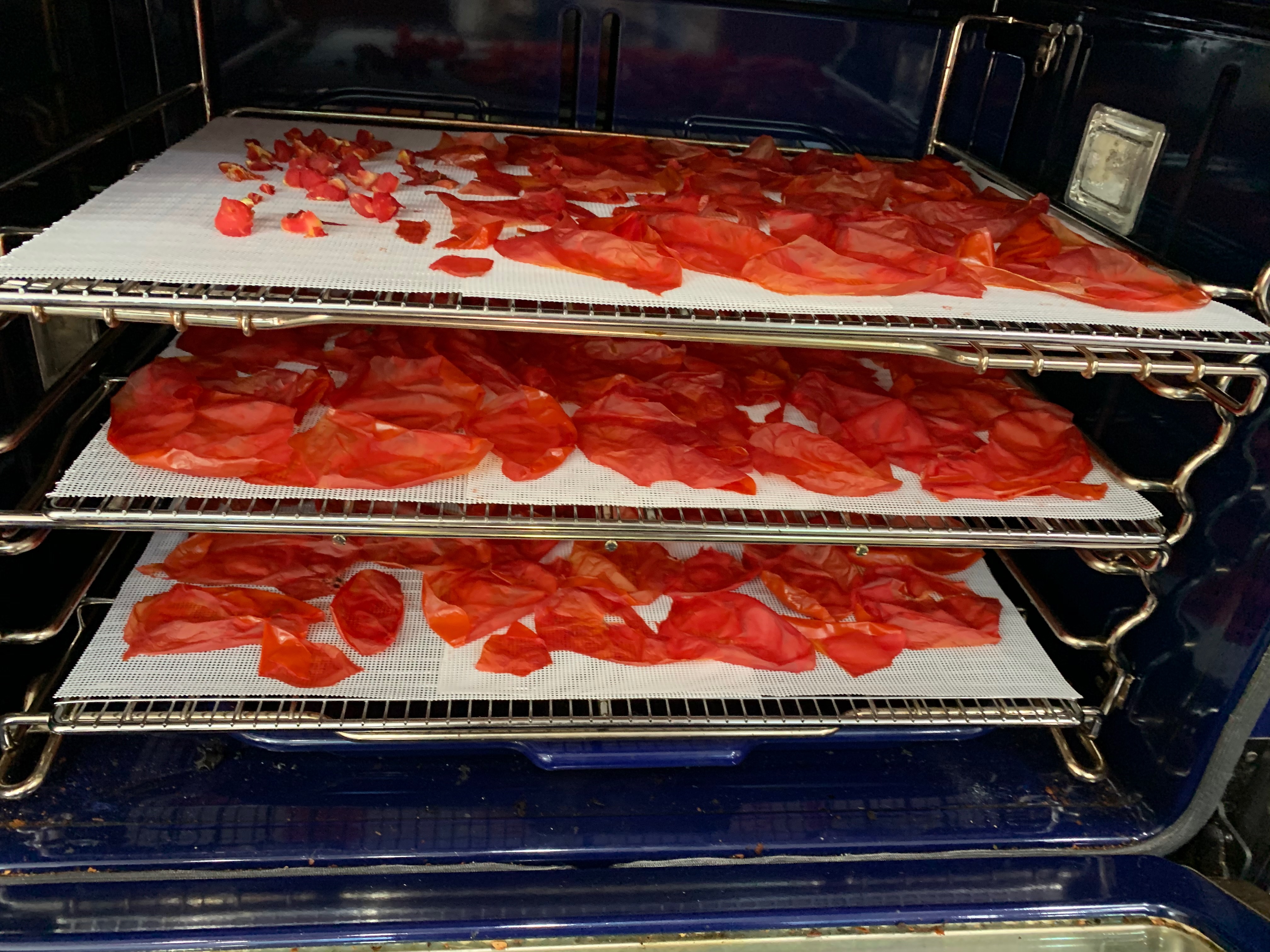
Those tomato skins from canning season? Don’t compost them—dehydrate them into a flavor powerhouse.
The Story
Every summer, canning season means peeling tomatoes. Blanch, peel, core, repeat. By the time you’ve processed a bushel of tomatoes into sauce or salsa, you’ve got a pile of skins and cores that most people toss in the compost.
For years, that’s what we did too—compost if we were being good, garbage if we weren’t. Then I started dehydrating them instead.
Those skins and cores—the parts you peel away to get smooth sauce—are packed with tomato flavor. Dehydrate them, grind them into powder, and you’ve got concentrated tomato in a jar. No waste. Shelf-stable for years. Ready to add depth to anything that needs a tomato boost.
What Goes In
When I’m canning tomatoes, I save:
- Tomato skins from blanching and peeling
- Cores (the tough stem end you cut out)
- Any bits that don’t make it into the jar—end pieces, odd shapes
I do remove any bad spots—this isn’t about using rotten food, just about using the parts that would otherwise go to waste.
I include the green stem part of the core too. Once it’s dehydrated and ground, you don’t notice it, and it’s less waste to sort out during the canning rush.
The Method
Step 1: Collect During Canning
As I’m processing tomatoes, I keep a bowl or sheet pan nearby for skins and cores. They go straight there instead of the compost bucket.
Step 2: Spread on Dehydrator Trays
Spread the skins and cores in a single layer on dehydrator trays. They don’t need to be perfectly flat—they’ll shrink as they dry.
My dehydrator doesn’t have a temperature setting, so I just let it run. If yours has settings, tomatoes do well around 135°F.
I run my dehydrator in the garage so it isn’t heating up my air-conditioned house. Canning season is hot enough without adding more heat inside.
Step 3: Dehydrate Until Brittle
Dry until completely brittle—no moisture left. This takes anywhere from 8-24 hours depending on your dehydrator, humidity, and how thick the pieces are. They should snap, not bend.
Step 4: Condition Before Grinding
Before grinding, I store the dried skins in mason jars for about a week, shaking the jar every day. This lets me check for any remaining moisture—if I notice condensation on the jar or the pieces getting soft, they go back in the dehydrator. Better to catch it now than have moldy powder later.
Step 5: Grind to Powder
Once you’re confident they’re fully dry, grind in a blender, food processor, or spice grinder. I pulse until it’s a fine powder, but you can leave it coarser if you prefer some texture.
Step 6: Store
I vacuum seal in mason jars with oxygen absorbers for long-term storage. The powder will last indefinitely if kept dry. A regular sealed jar works too—just use it within a year or so.
How I Use It
Tomato powder is concentrated flavor. A little goes a long way.
Soups and stews: A tablespoon or two adds tomato depth without adding liquid. Stir it in while cooking.
Chili: Deepens the tomato base. I add it along with the other spices.
Hotdishes and casseroles: Anywhere you want tomato flavor without chunks or extra liquid.
Thickening sauces: Because it’s dry, it thickens while adding flavor. Great for pasta sauces that are too thin.
Tomato paste substitute: I haven’t fully tested this yet, but in theory you can reconstitute with a little water to make paste. On my list to try.
Seasoning: Sprinkle on pizza, eggs, roasted vegetables—anywhere you’d add tomato flavor as a finishing touch.
The Sustainability Win
A bushel of tomatoes produces a lot of skins and cores. Instead of composting them (still good) or throwing them away (wasteful), dehydrating captures that flavor and nutrition.
What you’re saving:
- All the tomato flavor that would have gone to compost
- The energy and resources that grew those tomato parts
- Money on store-bought tomato paste and tomato-based seasonings
What you get:
- Shelf-stable tomato flavor that lasts for years
- Concentrated tomato punch in a jar
- One more way to use everything from the harvest
This fits the same philosophy as saving bones for broth or turning vegetable scraps into stock. The “waste” parts of food preparation often have value—you just need to capture it.
Tips from Our Kitchen
- Dry them fully. Any moisture left means mold risk. When in doubt, dry longer.
- Grind in batches. If you’re processing a lot, do smaller batches to get consistent powder.
- Label with the year. Even though it lasts a long time, it’s good to rotate through older stock first.
- Start small. The flavor is concentrated. Add a tablespoon, taste, then add more if needed.
Related Posts
- Why We Preserve - Beyond the Savings
- Kitchen Scraps to Broth
- Saving Bones for Broth - The Freezer Bag System
Tomato skins aren’t waste—they’re ingredients waiting to be transformed. One canning session’s scraps become a year’s worth of concentrated tomato flavor.