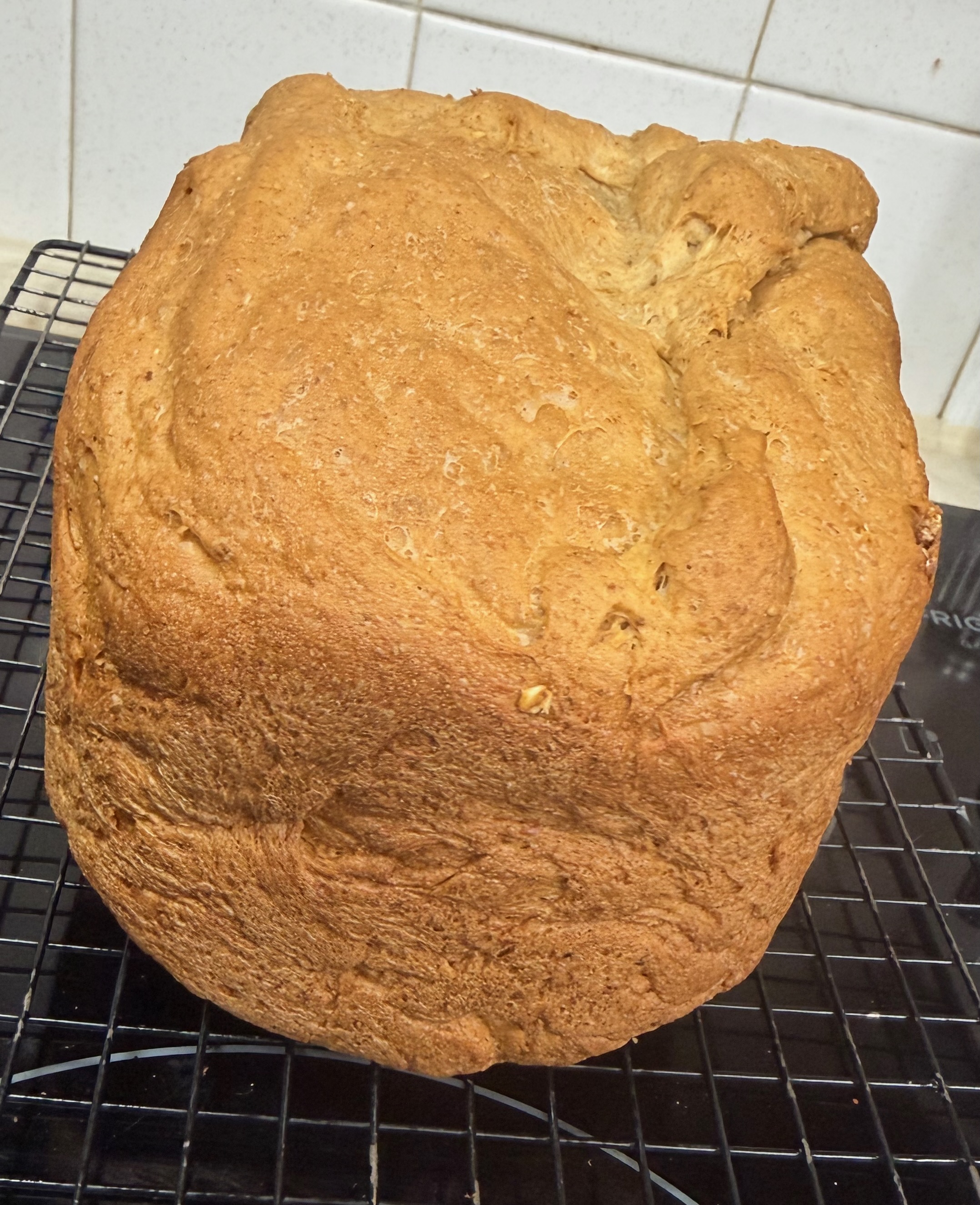
Our favorite bread machine recipe–hearty, wholesome, and the reason we stopped buying sandwich bread.
Why This Recipe
Store-bought bread is a packaging nightmare. Every loaf comes in a plastic bag with a plastic clip, and most households go through one or two loaves a week. That’s 50-100 plastic bread bags a year per family, most of which are not recyclable curbside. When you bake your own, the packaging drops to zero. Flour comes in a paper bag. Yeast comes in a jar you reuse for months. The bread goes into a reusable bread bag or straight onto the cutting board.
Homemade multigrain bread costs a fraction of store-bought. A loaf of quality multigrain bread runs $4-6 at the grocery store. This recipe makes a 1.5-pound loaf for roughly $1.50-2 in ingredients. Over a year, that’s $100-200 in savings–and that’s conservative if your household goes through bread quickly.
You control every ingredient. Read the label on store-bought multigrain bread sometime. Beyond the grains, you’ll find dough conditioners, preservatives, high-fructose corn syrup, and ingredients you cannot pronounce. This recipe has 11 ingredients, and you know every single one of them. Whole wheat flour, oatmeal, bran, honey, butter, yeast. That’s it.
The Story
This is our favorite bread machine recipe. Not “one of our favorites”–our favorite. It’s the bread I reach for when I want sandwich bread, toast bread, French toast bread, or “I just want a warm slice with butter” bread. It does everything well, and it does it with whole grains that make you feel like you’re actually eating something with nutritional value.
The beauty of this recipe is that the bread machine does all the work. You measure the ingredients, add them to the machine, press a button, and walk away. Three to four hours later, you have a warm loaf of bread that smells like a bakery and tastes like something you’d pay a premium for at a farmers market. There’s no kneading, no shaping, no oven–the machine handles the entire process from start to finish.
Fair warning: your loaf may not look perfect. Bread machines don’t produce Instagram-worthy artisan rounds. The top might be lopsided, the crust might be uneven, and it definitely won’t win any beauty contests. But slice into it, and you’ll forget all about appearances. This bread is delicious–and that’s what matters.
The key to this recipe is the ratio. The four grain ingredients–whole wheat flour, oatmeal, bran, and bread flour–must total 4 1/2 cups. That ratio is what gives the bread its structure and texture. The wheat gluten helps the whole grains rise properly, and the honey adds just enough sweetness to balance the earthiness of the bran and wheat. It’s a formula that works, and I’ve made it enough times to trust it completely.
Key Details
Prep Time: 10 minutes | Machine Time: 3-4 hours (varies by machine) | Yield: 1 loaf (1 1/2 pounds)
Sustainability Note: One 5-pound bag of bread flour makes roughly 7 loaves. One jar of yeast lasts even longer. Compare the packaging from 7 homemade loaves (one paper flour bag, one yeast jar) to 7 store-bought loaves (7 plastic bags, 7 plastic clips). The math speaks for itself.
The Recipe
Ingredients
| Amount | Ingredient |
|---|---|
| 1 1/4 cups | Water |
| 3 tbsp | Honey |
| 2 tbsp | Butter |
| 1 cup | Whole wheat flour |
| 1/2 cup | Oatmeal |
| 1/4 cup | Bran |
| 1 3/4 cups | Bread flour |
| 2 tbsp | Dry milk |
| 1 1/2 tsp | Salt |
| 3 tbsp | Wheat gluten |
| 2 tsp | Dry yeast |
Important: The four grain ingredients (whole wheat flour, oatmeal, bran, bread flour) must total 4 1/2 cups.
Instructions
-
Add ingredients: Add all ingredients to the bread machine pan, following your machine’s instructions for ingredient order. Most machines want liquids first, then dry ingredients, then yeast on top.
-
Select settings: Use the whole wheat setting if your machine has one. If not, the regular setting works fine.
-
Start the machine: Let the bread machine complete the full cycle. Resist the urge to open the lid during baking–you’ll let the heat out.
-
Cool: Remove the bread from the pan as soon as the cycle completes. Cool on a wire rack. Let it cool completely before slicing for the cleanest cuts.
Notes & Variations
- Grain total is critical: The four grain ingredients must total 4 1/2 cups. This ratio is what gives the bread proper structure. If you adjust one grain, adjust another to compensate.
- Wheat gluten: Do not skip this ingredient. Whole grains are heavier than white flour, and the added gluten helps the bread rise properly. Without it, you’ll get a dense, heavy loaf.
- Bread flour, not all-purpose: Bread flour has higher protein content, which gives the bread better structure and chew.
- Fresh yeast matters: If your yeast has been sitting in the pantry for a year, buy a new jar. Old yeast produces flat, dense bread.
- Not suitable for GF: This recipe requires wheat gluten and bread flour–it cannot be converted to gluten-free.
Variations:
- More whole wheat: Increase whole wheat to 1 1/2 cups, decrease bread flour to 1 1/4 cups (keep the 4 1/2 cup total)
- Add seeds: Toss in 2 tbsp sunflower seeds or flax seeds for extra texture
- Different grains: Try quinoa flakes instead of oatmeal for a different flavor
- Sweeter loaf: Increase honey to 1/4 cup
Additional notes from our kitchen:
- Slicing tip: Let the bread cool completely before slicing. I know it’s tempting to cut into a warm loaf, but the crumb hasn’t set yet and you’ll end up with squished, gummy slices. Wait at least 30 minutes. For sandwiches, an hour is even better.
- Freezing sliced bread: Slice the whole loaf, then freeze in a reusable bread bag or wrapped in beeswax wrap. Pull out slices as needed and toast directly from frozen. This is how we keep homemade bread available all week without it going stale.
- Toasts beautifully from frozen: This might be the best toast bread I’ve ever had. The whole grains give it a nutty, complex flavor that comes alive under the broiler or in the toaster.
- Batch baking: On weekends, I sometimes make two loaves back to back–one for the week, one for the freezer. It takes no more effort than one, just more machine time.
Serving Suggestions
- Perfect for sandwiches–sturdy enough to hold fillings without falling apart
- Makes exceptional toast with butter and honey
- Slice thick for French toast
- Serve warm with soup or stew
- Use stale slices for homemade breadcrumbs
Storage & Make-Ahead
- Room temperature: Store in a bread bag or wrapped in a clean towel for up to 3 days.
- Freeze: Slice and freeze for up to 3 months. Toast directly from frozen.
- Breadcrumbs: If a loaf goes stale before you finish it, pulse it in the food processor for homemade breadcrumbs. Store in a jar in the freezer.
Links & References
- Source: Family recipe collection
Related Friday Food Posts:
- French Bread (Bread Machine)–another bread machine recipe, this one finished in the oven for a crispy crust
- Grandma Seely’s Banana Muffins–another baking staple from our kitchen
- Fluffy Apple Oatmeal–toast a thick slice and serve alongside
Equipment used in this recipe: As an Amazon Associate, I earn from qualifying purchases.
- Zojirushi Home Bakery Virtuoso Bread Machine — our top pick, handles GF dough beautifully
- Hamilton Beach Bread Maker — solid budget option
Coming Soon:
- Sourdough Discard Cinnamon Twists–when you want bread baking to feel like a treat
The best sandwich bread is the one you made yourself–with ingredients you can pronounce, in a machine you already own, for a fraction of what the grocery store charges. Press the button, walk away, and come back to something worth eating.