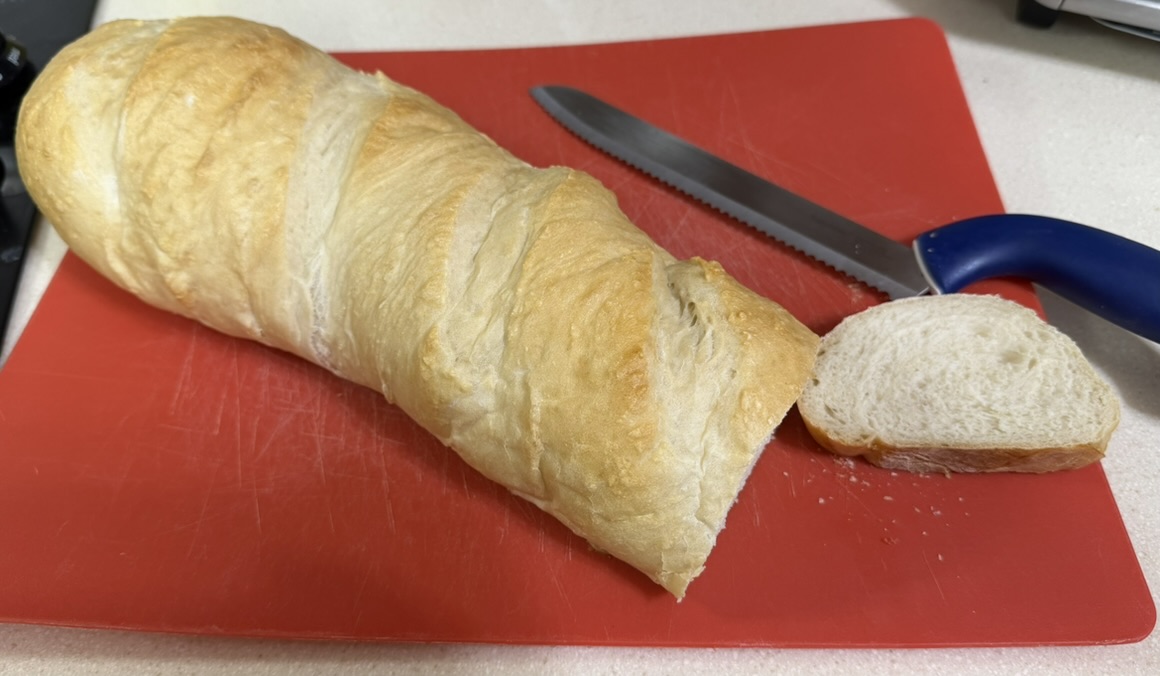
Bakery-quality French bread at home–your bread machine does the hard work, and you get the credit.
Why This Recipe
Homemade bread eliminates packaging waste entirely. A loaf of French bread from the grocery store comes in a plastic bag, often with a twist tie, a price sticker, and sometimes a second bag inside the first. Bakery loaves come in paper bags lined with plastic windows. When you bake at home, there’s no packaging to dispose of–just flour from a bag you’re already using, yeast from a jar that lasts months, and a loaf that goes straight from your oven to your cutting board.
Bread machine bread costs pennies. The ingredients for this loaf–flour, water, butter, yeast, sugar, salt–total roughly $1.50. A comparable bakery French loaf runs $3-5. Over a year of weekly baking, that’s $75-180 in savings. And because the bread machine handles the kneading and rising, your actual hands-on time is about 15 minutes. The machine does the labor. You do the shaping and baking.
There’s a reason bakeries smell the way they do. Nothing you buy pre-made will ever match the smell of bread baking in your own kitchen. That crispy crust, that soft interior, that moment when you pull a golden loaf out of the oven–that’s worth the 15 minutes of effort every single time.
The Story
I’ll be honest–I didn’t grow up making bread. Bread was something you bought at the store, and if you were lucky, someone in the family had a bread machine collecting dust on the counter. Ours didn’t collect dust. Once I figured out that a bread machine could do all the kneading and rising for me, and all I had to do was shape the dough and bake it in the oven, French bread became a regular in our kitchen.
The trick most people don’t realize about bread machines is that the dough setting is the real star. You don’t have to bake the bread in the machine–in fact, for French bread, you shouldn’t. The machine kneads and rises the dough perfectly, and then you take over for the shaping and oven baking. That’s how you get a real French loaf with a crispy crust and an open crumb instead of the dense, square loaf that comes from baking inside the machine.
This recipe is forgiving and reliable. The water needs to be 80 degrees F, the dough needs its 15-minute rest after the machine cycle, and the scoring needs to happen before baking. Beyond that, it’s hard to mess up. I’ve made this on busy weeknights, on lazy weekend mornings, and for dinner parties where I wanted something impressive without spending hours in the kitchen. It delivers every time.
Key Details
Prep Time: 15 minutes (plus machine time and rising) | Rising Time: 45-50 minutes | Cook Time: 20-25 minutes | Total Time: ~2.5 hours | Yield: 1 loaf
Sustainability Note: Homemade bread uses bulk pantry staples–flour, yeast, salt, sugar, butter–that come in minimal packaging and last for multiple bakes. No plastic bread bags, no twist ties, no price stickers. One bag of bread flour makes 7-8 loaves.
The Recipe
Ingredients
Dough:
| Amount | Ingredient |
|---|---|
| 1 1/4 cups | Water, 80°F |
| 1 tbsp | Butter |
| 3 1/2 cups | Bread flour |
| 1 1/2 tsp | Sugar |
| 1 1/4 tsp | Salt |
| 2 tsp | Active dry yeast (or 1 1/2 tsp bread machine/fast rising yeast) |
Egg Wash:
| Amount | Ingredient |
|---|---|
| 1 | Egg white, slightly beaten |
| 1 tsp | Water |
| As needed | Cornmeal (for dusting baking sheet) |
| Optional | Poppy or sesame seeds |
Instructions
-
Make the dough: Put the first 6 ingredients into the bread machine pan, following your machine’s instructions for ingredient order. Set the machine to the dough setting and let it complete the full cycle.
-
Rest the dough: When the cycle is done, place the dough onto a floured surface. Let it rest for 15 minutes. Don’t skip this step–the rest lets the gluten relax so the dough is easier to shape.
-
Shape the loaf: Roll the dough into a 15×12-inch rectangle. Roll up tightly from the long side. Seal the seam and taper the ends. Place seam side down on a greased baking sheet sprinkled with cornmeal.
-
Second rise: Cover the loaf and let it rise in a warm, draft-free place for 45-50 minutes, or until nearly doubled in size.
-
Score and glaze: With a sharp knife, make 3-4 diagonal cuts about 1/4-inch deep on top of the loaf. Combine the egg white with 1 tsp water and brush over the top. Sprinkle with poppy or sesame seeds if desired, or leave plain.
-
Bake: Bake at 375°F for 20-25 minutes until golden brown and the loaf sounds hollow when tapped on the bottom.
-
Cool: Cool on a wire rack. Try to wait at least 10 minutes before slicing–the bread is still cooking inside.
Notes & Variations
- Water temperature: 80°F is important for proper yeast activation. Too hot kills the yeast; too cold and it won’t activate. Use a thermometer if you’re not sure.
- Bread flour vs. all-purpose: Use bread flour, not all-purpose. The higher protein content gives French bread its characteristic chew and structure.
- Yeast options: Active dry yeast and bread machine (fast-rising) yeast both work. If using fast-rising, use 1 1/2 tsp instead of 2 tsp.
- Cornmeal on the baking sheet: This prevents sticking and adds that authentic bakery texture to the bottom of the loaf.
- Scoring: Those diagonal cuts are not just decorative–they allow the bread to expand properly during baking without splitting.
- Not suitable for GF: Yeast bread requires gluten structure for proper rising and texture.
Variations:
- Garlic bread: Brush with garlic butter before baking
- Herb bread: Add 1 tbsp dried Italian herbs to the dough
- Whole wheat version: Replace 1 cup bread flour with whole wheat flour
- Dinner rolls: Divide the dough into 8-10 portions and shape into rolls instead of a loaf
Additional notes from our kitchen:
- The dough setting is the secret. If you’ve only ever baked bread inside your bread machine, try the dough setting and finishing in the oven. The difference in crust quality is dramatic.
- Freezer-friendly: This bread freezes beautifully. Wrap the cooled loaf in foil and freeze for up to 3 months. Reheat in a 350°F oven for 5-10 minutes and it tastes fresh-baked.
- Double batch: If your bread machine can handle it, make two doughs back-to-back and shape both while the oven preheats. Two loaves for the effort of one.
- Soup night staple: We make this almost every time soup is on the menu. Homemade French bread with a pot of soup is one of those meals that feels like a restaurant experience for a fraction of the cost.
Serving Suggestions
- Serve warm with butter alongside soup or salad
- Slice for bruschetta or crostini
- Make garlic bread for pasta night
- Use for sandwiches
- Slice thick for French toast the next morning
Storage & Make-Ahead
- Room temperature: Store in a paper bag for up to 2 days. French bread is best the day it’s made, but it holds up well for toast and sandwiches the next day.
- Freeze: Wrap in foil and freeze for up to 3 months. Reheat in a 350°F oven for 5-10 minutes.
- Make-ahead: You can run the dough cycle in the evening, refrigerate the dough overnight, and shape and bake in the morning. Let the cold dough come to room temperature for 30 minutes before shaping.
Links & References
- Source: Family recipe collection
Related Friday Food Posts:
- Homemade Bone Broth–the perfect partner for a warm loaf of French bread
- Mom’s Thai Curry–serve with bread for soaking up every last bit of sauce
- Multigrain Bread (Bread Machine)–our favorite everyday bread for sandwiches and toast
- Kitchen Scraps to Broth–another from-scratch staple that pairs beautifully with fresh bread
Equipment used in this recipe: As an Amazon Associate, I earn from qualifying purchases.
- Zojirushi Home Bakery Virtuoso Bread Machine — our top pick, handles GF dough beautifully
- Hamilton Beach Bread Maker — solid budget option
Coming Soon:
- Sourdough Discard Cinnamon Twists–a sweet twist on bread baking with sourdough starter
The bread machine does the kneading. The oven does the baking. You do the eating. That’s a division of labor worth investing in.